 Deutsch
AI-Designers



Why vector search alone slows your AI down
Many companies rely on Retrieval-Augmented Generation and store their knowledge as vectors. Vector search finds semantically similar content, even when the words differ. At first glance, that sounds like the perfect foundation for an internal AI.
Yet practice reveals a gap. When an employee searches for an exact part number, a contract clause, or a product code, pure vector search often fails. It returns thematically related hits, but not the one precise term. The AI then answers plausibly, but incorrectly.
This is exactly where hybrid search steps in. It combines semantic vector search with classic keyword search. As a result, your systems find both the meaning and the exact word. For companies, this approach decides in 2026 whether AI answers stay reliable.
How hybrid search works at its core
Keyword search compares words directly, usually through proven methods like BM25. It excels at proper names, codes, and technical terms. Vector search, by contrast, captures meaning and context. It understands that “termination” and “end of contract” belong together.
A hybrid system queries both methods in parallel. It then merges the result lists and weights them. A reranking step sorts the hits by true relevance. This way, the best passage for every question reaches the AI’s context.

This design stays lean and affordable. You run it entirely on your own hardware, without sending data to external services. Open-source components like Elasticsearch, OpenSearch, or Qdrant already support hybrid search natively. So you keep full control over your sensitive information.
Concrete use cases in the enterprise
A technical support team searches manuals, tickets, and spare-part lists. When a customer asks about error code “E-4711”, the system must find exactly that code. At the same time, it should surface related faults. Hybrid search delivers both and noticeably shortens handling time.
In the legal department, every word counts. Lawyers search for specific clauses, but also for equivalent wording in legacy contracts. A purely semantic system misses the exact reference. The combination ensures completeness and protects against costly mistakes.
Procurement benefits as well. Staff search for material numbers, suppliers, and specifications at once. Hybrid search connects the structured catalog with unstructured offers. So your teams find the right offer faster and negotiate on firmer ground.
Why pure vector systems hit limits in 2026
Analyses show a clear trend: standalone vector databases are losing share. Companies recognize that semantic proximity alone does not suffice. With exact terms, gaps appear that no one accepts in a production environment.
Hybrid search therefore increasingly counts as a baseline requirement, not an add-on. It prevents the typical failures on nouns, codes, and identifiers. In regulated industries especially, one wrong hit weighs heavily. Combining both methods lowers this risk substantially.
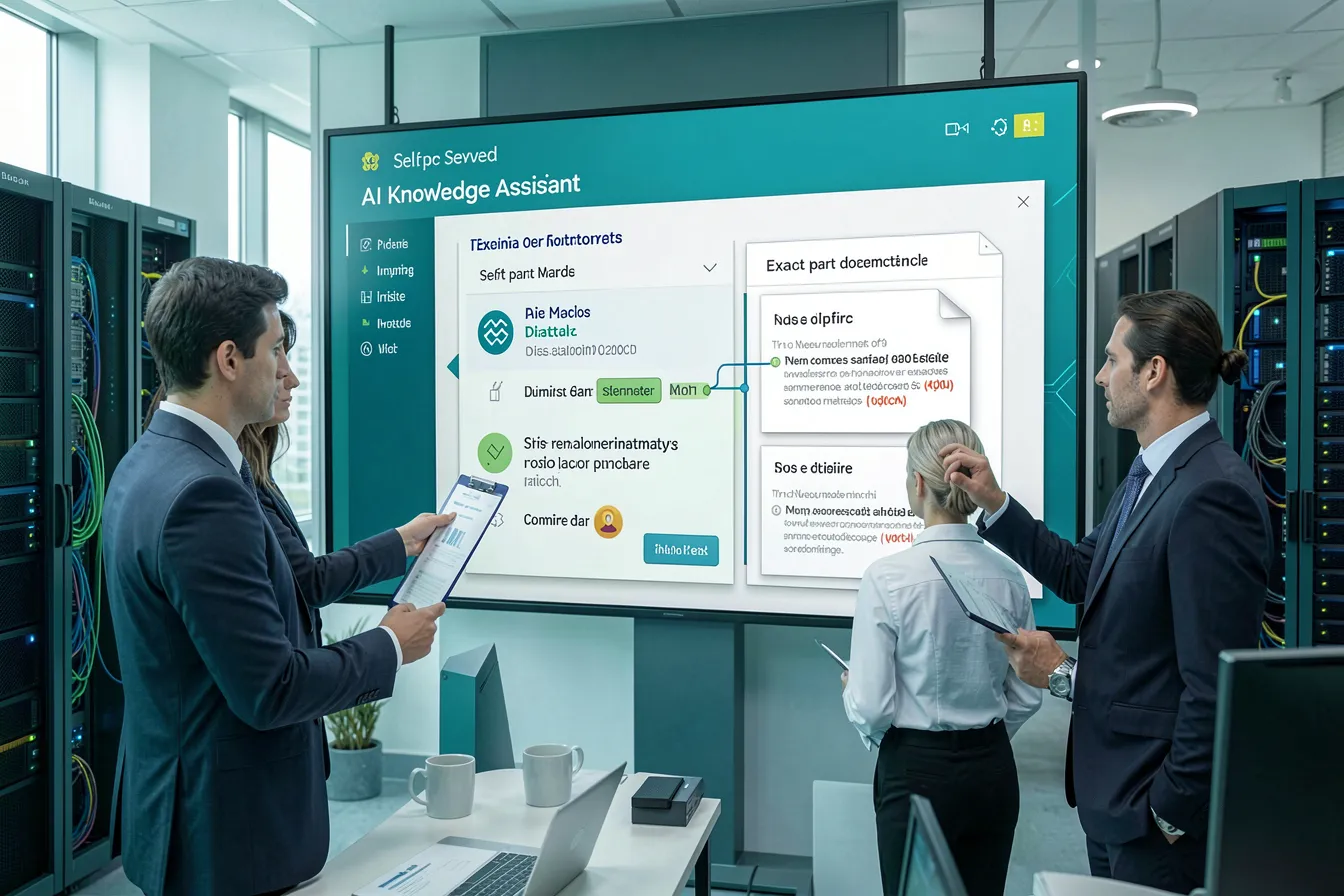
The cost angle matters too. Teams that use vectors alone often scale expensive compute to offset weaknesses. Classic keyword search, in contrast, works efficiently and sparingly. It complements vector search and relieves your infrastructure instead of straining it further.
How to introduce hybrid search
Start with a clear inventory of your data sources. Separate structured catalogs from unstructured documents. Then choose a system that supports both search methods natively. Many open-source solutions already cover this need.
Test quality with real questions from daily work. Measure how often the system delivers the exact reference. Adjust the weighting between keyword and vector to your cases. A reranking model raises precision even further.
Plan operations from the very start. Define who maintains new documents and reviews results. This keeps your system current and trustworthy. With this approach, you build a solid foundation for reliable enterprise AI.
Conclusion: precision comes from combination
Vector search understands meaning, keyword search hits the exact word. Only together do both deliver reliable answers. For companies, that means fewer errors, faster processes, and more trust in their own AI. Hybrid search thus becomes the standard for productive systems.
Do you want to run hybrid search and RAG securely on your own hardware? The experts at AI-Designers guide you from concept to productive operation of your self-hosted AI. Get in touch and unlock the full value of your enterprise knowledge.
Images: AI-Designed